Why Flat Roofs Leak in Ways Pitched Roofs Do Not
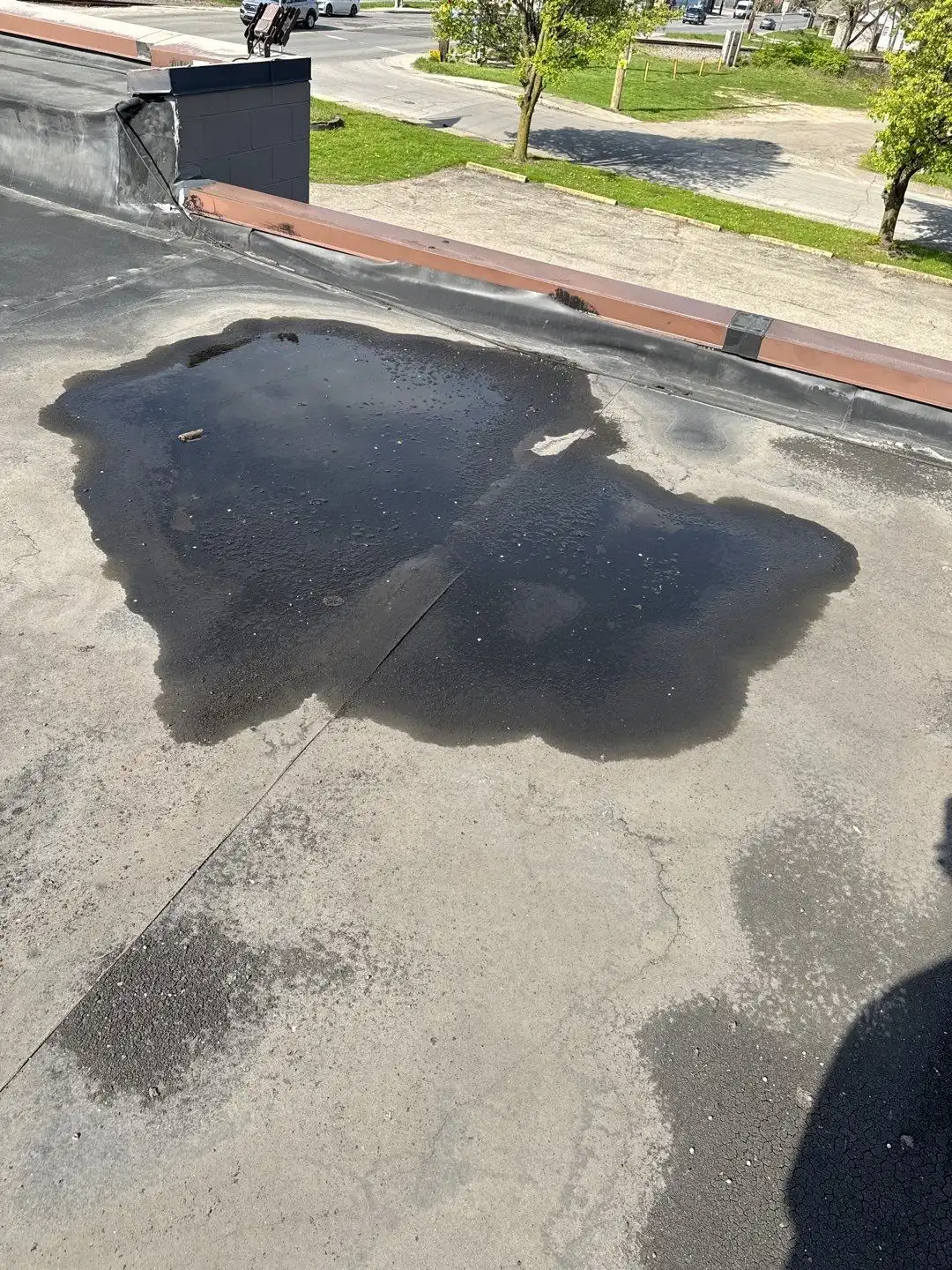
A sloped shingle roof sheds water through gravity and overlapping courses, so a small defect often goes unnoticed for years. A flat roof, which is really a low slope roof with a pitch of about a quarter inch per foot, depends on a continuous waterproof membrane and properly working drains. When that membrane gets compromised, water has nowhere to go but sideways and eventually down. In Crothersville, the freeze thaw cycles common to Central Indiana are especially hard on seams, flashings, and any area where two materials meet. A small crack in November becomes a wide split in February, and the spring rains find it immediately.
The most common entry points we trace are seam separations on EPDM rubber roofs, pinholes and shrinkage at the perimeter, failed pipe boots around HVAC penetrations, cracked pitch pans, blistered or torn TPO welds, and clogged interior drains that let water pond several inches deep until it finds the path of least resistance. On modified bitumen and built up roofs, the failure point is often a lap seam that has dried out, lifted, and started wicking. None of these problems announce themselves clearly from the inside of the building, which is why diagnosis matters more than the patch itself. If you suspect the leak is feeding an attic cavity or insulation layer, our notes on attic water damage from roof leaks explain how that hidden moisture behaves once it gets past the deck.
Age and sun exposure compound every one of these failure modes. A black EPDM roof in Crothersville can hit surface temperatures above 160 degrees in July and drop below freezing the same week in winter, and that thermal swing pulls and pushes on every adhered seam thousands of times a year. Mechanical units installed years after the original roof was built are another quiet source of trouble, because the curbs were often flashed in a hurry and the original membrane was never designed to wrap around them cleanly. We also see foot traffic damage from HVAC technicians and other trades who walk a regular path to the rooftop equipment, slowly grinding the membrane against the insulation board beneath it until a small puncture opens up.
How We Find the Actual Source
Leak detection on a flat roof is part detective work, part instrumentation. We start with a walk of the entire roof surface, not just the area above the visible stain, because water frequently enters thirty or forty feet away from where it drips. We look at every penetration, every termination bar, every drain bowl, and every transition where the membrane meets a wall or curb. On older roofs we map blisters and soft spots that indicate wet insulation under the membrane.
From there we use moisture meters and infrared scanning to find saturated areas inside the roof assembly. Wet insulation holds heat differently than dry insulation, and a thermal camera reveals the wet zone as a clear thermal pattern, usually fanning out from the true entry point. We pair that with interior moisture mapping with thermal imaging when the leak has already wet drywall or ceiling structure, so we know exactly how far the damage has spread before any repair begins. For tricky cases where the entry point still is not obvious, controlled water testing on isolated sections of the roof confirms the source before we cut into anything.
The reason this matters financially is simple. A patch in the wrong spot costs you the patch plus another service call plus more interior damage. A patch in the right spot, sized correctly to the failure, often holds for years. We also document what we find with photos and notes that get tied back to your file, so the next time something acts up we already know the roof, the membrane type, the fastener pattern, and the prior repair history. That continuity tends to save building owners real money over a five or ten year stretch, because the second visit is rarely a fresh investigation.
What Repairs Actually Cost in Crothersville
Pricing on flat roof repair depends on the membrane type, the size of the failure, accessibility, and whether wet insulation has to come out. The chart below shows the ranges we see most often on commercial and multi family buildings in the area.
Emergency tarping and temporary dry in to stop active water is usually a separate line item, and we explain that cost on the phone before we roll a truck. If your building has had multiple repairs in the last few seasons and the deck or insulation is widely compromised, we will say so and walk you through whether commercial roof replacement makes more sense than continuing to spot repair a failing membrane. If we cannot help, we will tell you directly.
Owners sometimes ask why two seemingly similar repairs land at very different prices, and the answer almost always comes back to what is hiding under the top layer. A seam repair on a dry, well adhered membrane is straightforward. The same seam, with eight feet of wet polyiso underneath it and a soft spot in the deck, becomes a section rebuild with disposal, new insulation board, new cover board, and a fully welded patch tied into sound membrane on all sides. We price what we actually find, and we share the photos so the invoice reflects the work without surprises. For buildings under active leases, we can also stage the work outside business hours when the schedule allows, which keeps tenants out of the conversation entirely.
What to Do Before We Arrive
If water is actively dripping inside, move inventory, electronics, and paper records out of the affected zone and put down buckets or plastic. Photograph the ceiling, walls, and any wet stock for your insurance file. Do not climb on a wet flat roof yourself, especially in cold weather, because TPO and EPDM membranes get slick and the edges are not always obvious. Note the time the leak started and roughly how heavy the rain was, because that information helps us narrow the entry point during the inspection. If interior finishes are already saturated, the drying side of the work matters as much as the roof repair, and our crews coordinate both so you are not chasing two contractors. When you call Crothersville Commercial Roofing, severity gets assessed over the phone first, and active leaks move to the front of the schedule for tarping and dry in so the building stops taking on water while we plan the permanent fix.